Emerging Consciousness
Emergent properties have always fascinated me.
One grain of sand is a grain of sand; 100 grains of sand are still grains of sand. Then how many does it take to make a dune? There is no hard number.
Life itself is an emerging property. Everything is made of atoms; atoms make molecules that together, combined, eventually create life. At what point is a bunch of molecules alive?
We are still not sure if viruses are alive or not:
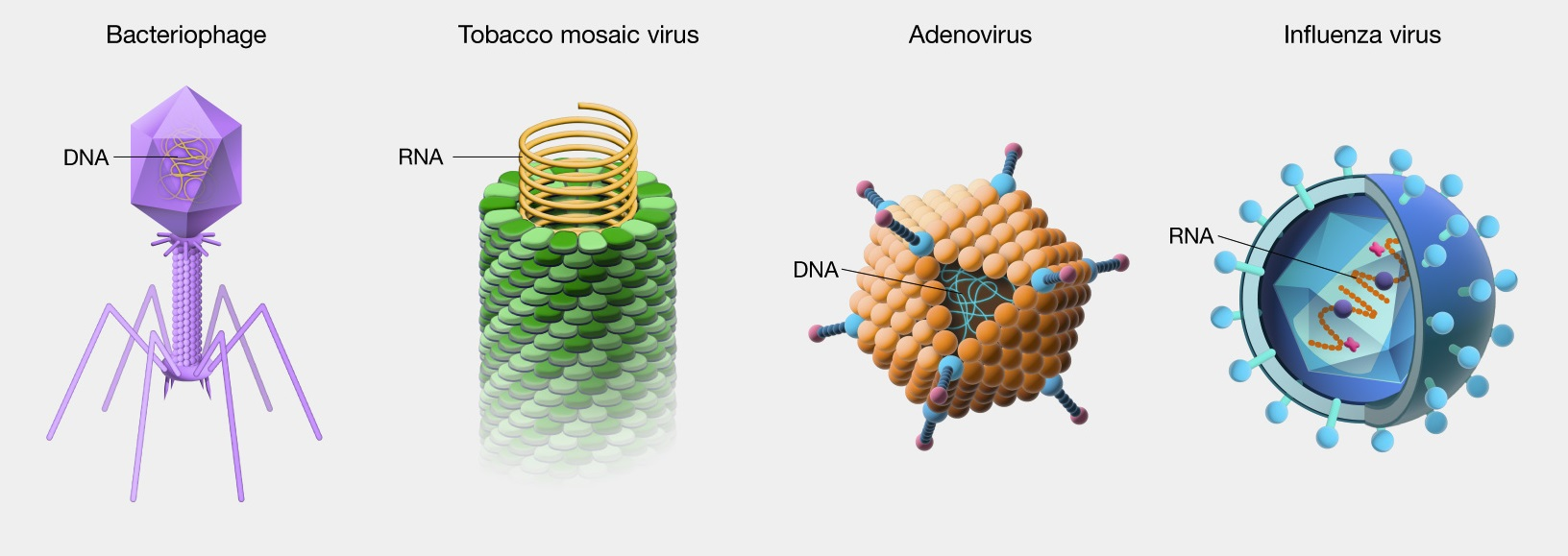
The smallest ones are a few hundred thousand molecules. Alive or not, the emerging property is that they are able to self-replicate, but there is nothing in the single molecules to tell it so.
Consciousness, which can be considered a higher state of life, is in itself an emergent property; a single neuron doesn’t think, but the scale-up of their quantity up to a critical threshold made consciousness emerge. Does it sound familiar?
I will argue, moreover, that since consciousness is an emerging property of the state of the electrons in a brain, it wouldn’t surprise me if it could emerge again from the state of electrons somewhere else.
Two big differences I see between biological brains and artificial ones are reversibility and continuity.
The non-reversibility of biological brains could simply be a technical limitation of ours (would that mean immortality if we mastered it?), but what I think is missing for AI to be really considered conscious is continuity.
Every conscious being in existence that we know of has a continuous behavior through time and cannot be paused or rewound (you might argue about the comatose state, but that’s more of an input/output shutdown): once the local minimum in entropy that’s life is gone, that cannot be restored.
Generative AI models, today, work in discrete time: inference is akin to thinking, but that stops the moment the EOS token is emitted. No amount of inference is touching the model weights, hence the AI “brain” is always in a frozen moment in time. Harnesses and all modern techniques can only work on the context, i.e. the sensory input for the frozen brain, which is the only thing that evolves in time. Concepts and patterns are learned by the model, in the model, only at training stage.
Would removing the barrier between inference and training make a model conscious? Will consciousness also work in discrete time? If it’s reversible, can it really be defined as consciousness?
Given that we know how to spend energy to reverse the state of a model, will they be the first conscious beings immune to death?
There’s a nonzero chance we’ll get to know it in our lifetime.